
Vending Machine Trends for 2027, Read From Our Own Order Book
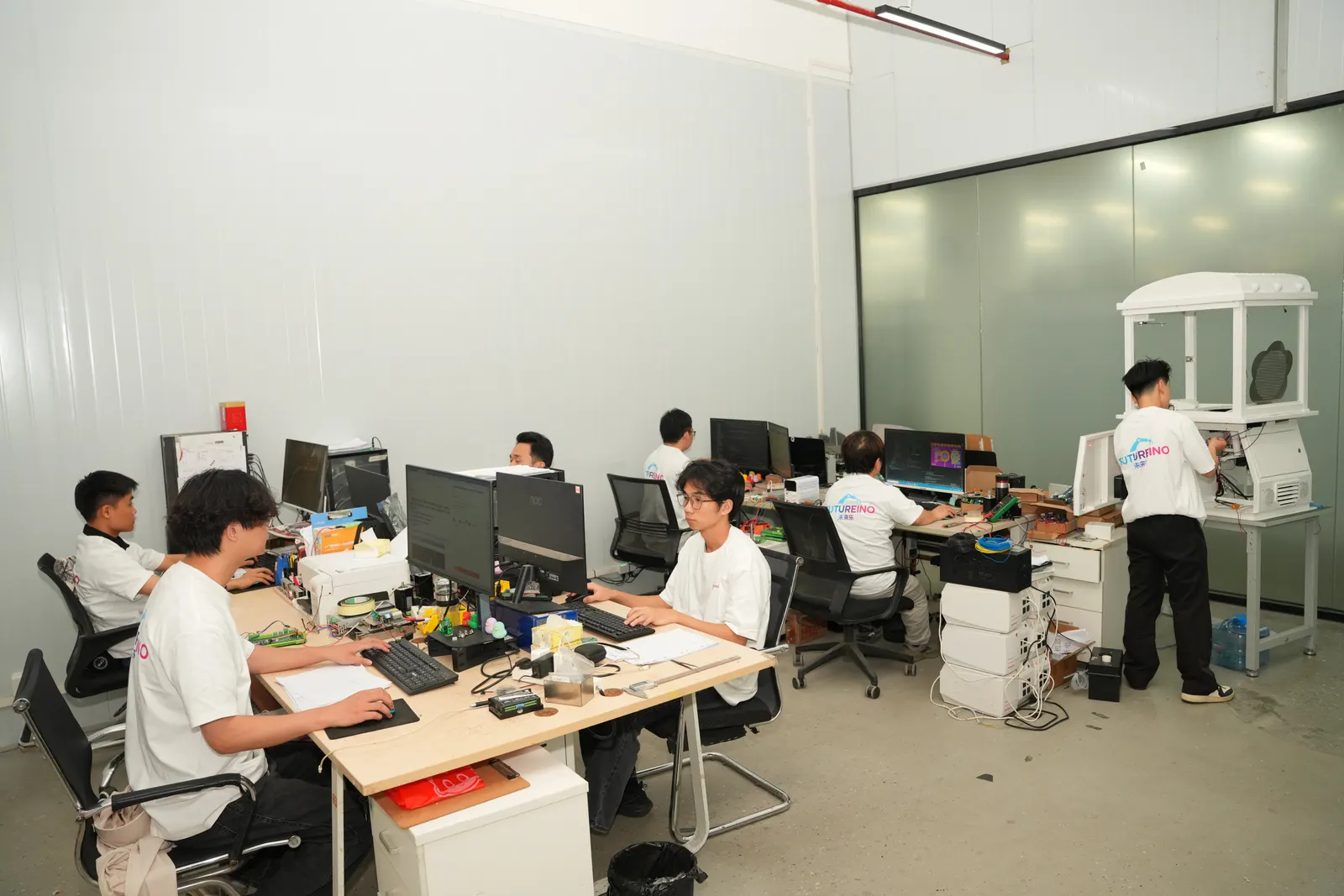
Every trend below comes from our own order book, and nothing below comes from a market forecast. We build vending machines in Guangzhou at a capacity of 500 a month and around 50,000 of the machines we have built are operating worldwide, so what we can honestly report is what people order from us and how that has shifted. Six things have moved. Two widely repeated predictions have not, at least not here. Where we do not have a number, this post says so rather than borrowing one.
That distinction matters more than usual in this genre. Trends posts in this industry tend to recycle the same unsourced percentages until they read as fact. A figure you cannot trace should not survive into your business plan.
1. The order book moved from shelves to processes
Our three best selling models all make something while the customer stands there. The cotton candy robot has passed 1,000 units sold, and the perfume station and the protein shake station are both past 500. None of them is a glass fronted cabinet. The cotton candy machine spins a cone in 180 seconds from a 200 serving hopper, the shake station delivers a cup in 60 seconds from 24 litres of powder across 8 containers, and the perfume unit sprays from 6 nozzles with over 1,000 doses loaded.
The commercial logic is not complicated. A machine that performs holds a queue, and a queue is free advertising in a mall corridor. Our own guidance on what those machines take in sits in what vending machines actually make, and the honest version is a range: in Western markets the larger machines average over 2,000 US dollars a month with some passing 5,000, smaller units like the perfume station average over 700 a month with some passing 2,000, and other markets run at 30 to 70 percent of those figures. Venue decides more than model does.
2. Half our buyers are companies, not individuals
About 50 percent of our customers are corporate: brands commissioning custom builds and white label distributors reselling machines under their own name. Roughly 25 percent are existing vending, entertainment or retail operators adding machines to something they already run. The remaining 25 percent are first time entrepreneurs buying their first machine. That mix surprises people who assume this is a solo operator market.
The corporate half also behaves differently. Three white label distributors reorder from us every month: a European client taking 80 plus machines, a US client at 50 plus and a Saudi client at 30 plus. Recurring orders at that size are the strongest quality signal we have, because nobody repeats a mistake monthly. If you are considering that route yourself, white label vending machines explains how it is structured.
3. Model churn is the real product cycle
40 plus models are on our catalogue right now. More than 250 have been built across the company's history. The gap between those two numbers is the trend: our R&D team of 30 plus engineers, inside a company of 250 plus people, launches roughly 40 new models a year, and models that stop selling come off the list rather than lingering on it.
For a buyer that cuts both ways and it is worth saying the uncomfortable half out loud. Fast churn means the machine you buy is close to current rather than a decade old design. It also means you should ask, before ordering, how long parts will be supported for the specific model you are getting. Our answer is that parts ship from Guangzhou in 7 to 14 days and a free spare parts package comes with every machine, but you should ask that question of any factory whose catalogue turns over quickly, including ours.
4. The lineup is splitting at both ends of the size range
The published spec sheet now spans a wider range than it used to, and the two extremes are the interesting part.
| Machine | Footprint (L x W x H, mm) | Power | Capacity per fill | EXW price |
|---|---|---|---|---|
| Perfume Station (wall unit) | 888 x 210 x 670 | 25 W | 1,000+ doses, 6 nozzles | 1,400 USD |
| Cotton Candy Robot | 1,421 x 727 x 2,084 | 2,488 W | 200 servings | 5,500 to 5,800 USD |
| Ice Cream Truck | 1,600 x 1,050 x 2,400 | 1,000 W | 315 items across 45 slots | 6,200 to 7,200 USD |
| FutureClaw | 800 x 830 x 2,060 | 336 W | 50 prizes | 1,400 to 1,600 USD |
A 25 watt wall unit and a 2,488 watt robot are not the same business. The small end goes where a full cabinet cannot: a corridor wall, a salon, a hotel lift lobby, a site with one spare socket. The large end needs a dedicated circuit and floor space, and it earns accordingly. We are not going to claim a percentage shift between the two, because we do not publish unit splits by size. What we will say is that the small end exists because buyers kept describing sites that could not take a full machine. Work out which end your venue is by walking it with a tape measure and a look at the socket, and the sizing table in machine sizes and door fit covers the rest of the lineup.
5. The payment rails changed before the machines did
Card and wallet acceptance is now the default specification rather than an upgrade request, and the way people pay us for the machine itself has shifted too: bank transfer, Alibaba Trade Assurance and credit card through Alibaba are all normal now, where a wire used to be the only option. We do not publish a cashless adoption percentage. Anyone who quotes one at you should be asked where it came from.
The operational consequence is the part worth planning around. A card only machine stops selling the moment its connection drops, while a coin mechanism trades through the outage untouched. In markets where cash has genuinely disappeared this is academic. Everywhere else, keeping cash acceptance is cheap insurance against a weekend nobody noticed. Both sides are set out in cashless vending machine payments and what actually breaks when a machine goes offline.
6. Reliability became a specification, not a hope
Buyers now ask about fault rates on the first call, which they did not use to. In our experience across the industry, a machine imported from China develops a fault about once a month. Ours average a fault about once in three months, and most of those are small settings corrections rather than hardware failures. On arrival condition, our sense of the industry is that roughly 1 machine in 10 lands faulty, against about 1 in 75 for us.
Read those comparisons carefully. Our own rates are ours and we stand behind them. The industry halves are our estimate from years of hearing what buyers arrived with, not a published study, and we would rather label them than dress them up. The terms that follow from them are checkable though: one year warranty with free support, free spare parts and replacement of components that fail internally, set out in warranty and after sales support.
Two predictions we are not seeing
The first is that AI will transform every machine. Camera based interaction and generated images are real, they sell, and they are the reason the photo and print machines run the cycles they do. A snack cabinet with a language model bolted onto the screen is still a snack cabinet, and the test is simple: ask what stops working when the internet drops. If the answer is nothing important, the AI was decoration. We went through that separation in detail in what AI vending machines actually do.
The second is that unattended means zero labour. It does not. An experience machine has consumables to load, a cleaning routine, and a queue at the weekend that pays for itself only if somebody keeps the hopper full. The realistic workload per machine is broken down in the maintenance guide, and the honest comparison against paying a person to do the same job is in a cotton candy robot versus hiring staff.
What this post deliberately does not claim
We have no defensible figure for total industry size, for the share of malls running robotic machines, or for how fast the category is growing worldwide. We see our own orders and nothing else, which is a large sample of one company rather than a survey. If a number in this post matters to your plan, it is either one of our published operating figures or it is labelled as an estimate, and the rest of our numbers sit in how big Futureino actually is so they can be compared against each other.
Frequently Asked Questions
What is the biggest trend in vending machines right now?
In our order book it is the move from shelves to processes. Our three best selling models all make something while the customer watches: the cotton candy robot at over 1,000 units sold, the perfume station and the protein shake station both past 500. A machine that performs earns attention that a glass front cabinet does not.
Are vending machines still a growing business in 2027?
We can only speak for what we ship. Capacity across our three facilities runs at 500 machines a month, we have reached 53 countries, and three white label distributors reorder every month at 80 plus, 50 plus and 30 plus machines. That is our own demand, not an industry forecast, and you should treat it as such.
Will AI change vending machines?
Some of it already has, and a lot of the marketing around it is decoration. Camera based interaction and generated images on photo and print machines are real features people pay for. A snack cabinet with a chat screen bolted on is a snack cabinet. Judge the claim by what stops working when the connection drops.
Are vending machines going fully cashless?
Card and wallet readers are now the default on the machines we build, and we do not publish an adoption percentage because we do not have a defensible one. The practical point is that a card only machine stops selling when the connection drops, so in markets where cash still moves, keeping the coin mechanism is cheap insurance.
Who is actually buying vending machines now?
Roughly half our customers are companies: corporate clients ordering custom builds and white label distributors reselling under their own brand. About a quarter are existing vending, entertainment or retail operators, and about a quarter are first time entrepreneurs buying their first machine.
How often do new vending machine models appear?
In our factory, about 40 new models a year. That is why 40 plus models are available now while more than 250 have been built across the company's history: the catalogue is a snapshot, not an archive. A model that stops selling is retired rather than kept on a price list.
Planning for next year rather than next week
Tell us the market, the venue type and the budget, and we will tell you which of the current models fit, what they cost EXW and what the running workload looks like before you commit to anything.