
Vending Machine Maintenance: What a Robotic Machine Actually Needs
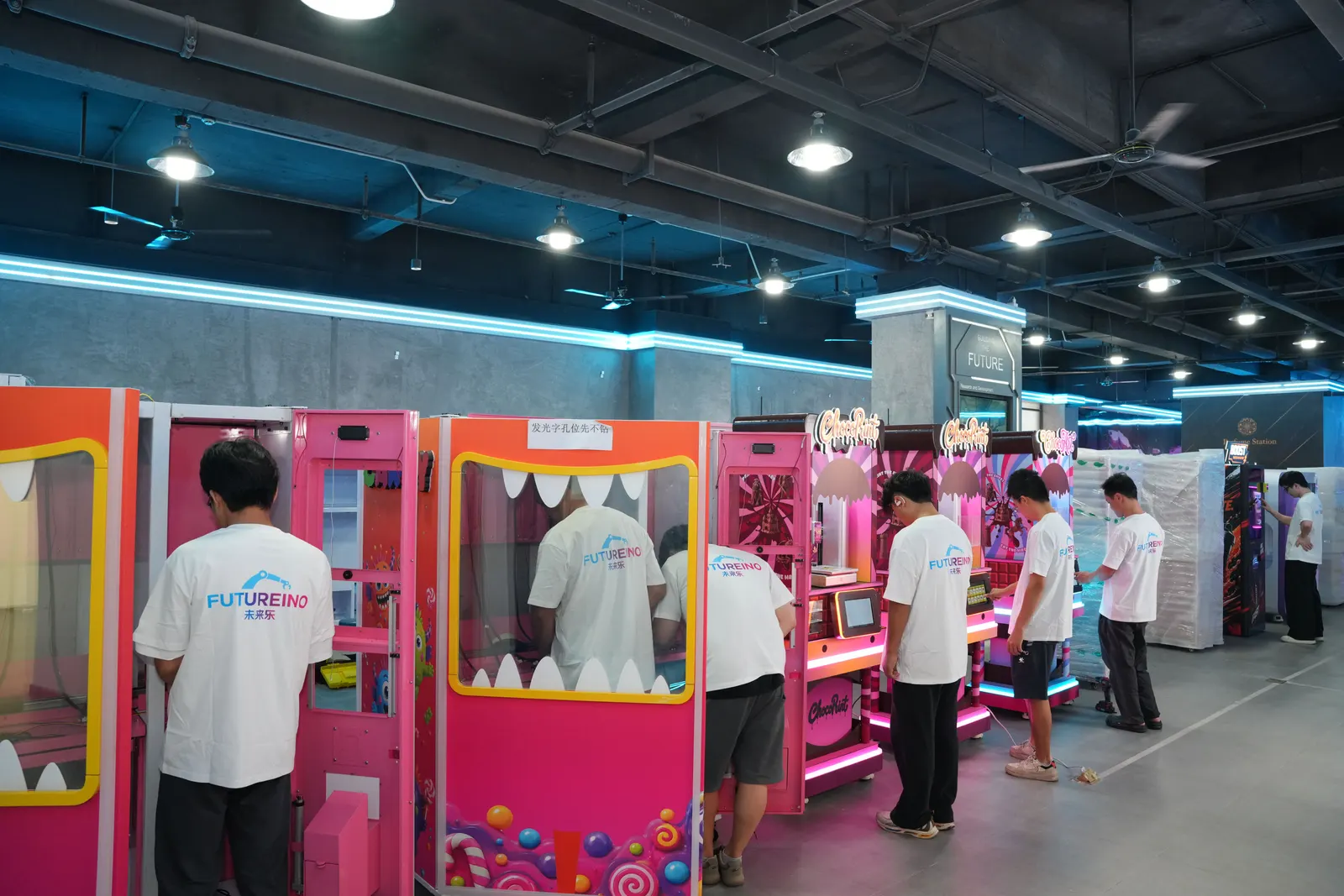
Vending machine maintenance on a modern robotic machine is one visit every 7 to 14 days, lasting 15 to 30 minutes: refill the consumable, wipe the product path, clean the screen, glance at the card reader. That is the whole routine for most Futureino machines. There is no daily service, no weekly technician, no maintenance contract. Twice a year you do a deeper clean, and once a year a full mechanical check. Everything else is handled before you arrive, because the machine reports its own stock levels and faults remotely.
That short answer hides the interesting part, which is why the interval is that long, and what happens on the days it is not. We build these machines in Guangzhou and support them in 53 countries, so we see every failure that comes back to us. Below is the honest version: the real schedule, the things that actually break, and the design decisions we made specifically to keep operators out of their vans.
The actual maintenance schedule
Here is the full task list for a robotic vending machine in a normal high-traffic venue. Times are for one machine, by an operator who has done it before. Nothing in the operator column requires tools or training beyond the setup videos that ship with the unit.
| Task | How often | Who does it | Time |
|---|---|---|---|
| Refill the consumable | Every 7–14 days (stock-driven) | Operator | 10–20 min |
| Wipe the food path and nozzle | Every refill visit | Operator | 5–10 min |
| Clean screen, glass and cabinet | Every refill visit | Operator | 3–5 min |
| Print cassette / paper change | Every 700 prints | Operator | 5 min |
| Cartridge or canister swap | Per product rotation | Operator | 5–15 min |
| Software update | As released | Pushed remotely by Futureino | 0 min for you |
| Water filter (drink machines only) | Every 3–6 months | Operator | 10 min |
| Deep clean of the product chamber | Quarterly | Operator | 45–60 min |
| Full mechanical check and calibration | Annually | Technician (remote-guided or local) | 1–2 hours |
Notice that the interval is driven by capacity, not by wear. A cotton candy robot holds 200 servings. An AI photo booth holds 700 prints per cassette. A Popcorn Bot holds 70 cups. Divide capacity by your daily sales and you have your visit schedule. A popcorn machine selling 40 cups a day needs you every second day, but only because it runs out of cups, not because anything is degrading. That is also why where you put the machine quietly sets your labor cost: the busiest site is the one you visit most.
What actually breaks, and why
Any factory can publish a maintenance table. The useful information is the failure list, so here it is without the marketing gloss. These are the tickets our after-sales team really sees.
Sugar and humidity, on anything that spins floss
This is the big one, and it is physics rather than engineering. Cotton candy is hot sugar thrown at high speed. Sugar is hygroscopic: it pulls water out of the air. In a humid venue, an open bag of sugar left in the hopper turns tacky, and tacky sugar does not flow evenly into the spinner head. The symptom operators report is "thin floss" or "uneven shapes", and the cause is almost never the machine. It is a half-used bag of sugar that sat in a coastal mall for three weeks.
The fix is procedural and it works: keep sugar sealed until the moment you load it, fill for the interval you actually sell rather than to the brim, and wipe the spinner head on every visit while the residue is still soft. Sugar residue that gets one wipe every ten days is a five-minute job. Sugar residue left for two months is a caramelised repair.
The print cassette, on the photo booth
The AI photo boothuses a dye-sublimation print engine, which is the same technology behind every professional event printer, and it fails in exactly one predictable way: the cassette runs out. Paper and ribbon are consumed together at 700 prints per cassette, so they finish at the same time. The honest caveat is that a dye-sub engine dislikes dust and fingerprints on the ribbon. Change the cassette with clean hands, seat it fully, and it will simply keep printing in 15 seconds a time. Nearly every "printer fault" ticket we receive resolves to a cassette that was not clicked home.
Jams, on anything with a spiral or a lift
Snack and item machines jam. That is the category's oldest complaint, and it is why our Snacks Bot uses an anti-jam spiral paired with a robot elevator lift rather than the classic drop-and-pray coil. A traditional spiral pushes a product forward until gravity takes it, which means a slightly oversized or badly loaded item hangs on the coil and the customer pays for nothing. The anti-jam geometry plus a lift that carries the product down to a side-collection window removes the drop entirely. It is a more expensive mechanism to build. We build it because a jam is not one failed sale, it is a refund, a bad review, and a site visit.
What remote monitoring catches before you drive out
The reason the maintenance interval can be two weeks instead of two days is that you are not guessing. Our machines report stock levels remotely, so you see a machine approaching empty from your phone and fold the refill into a trip you were already making. That single feature is what turns a route of ten machines from a full-time job into a weekend.
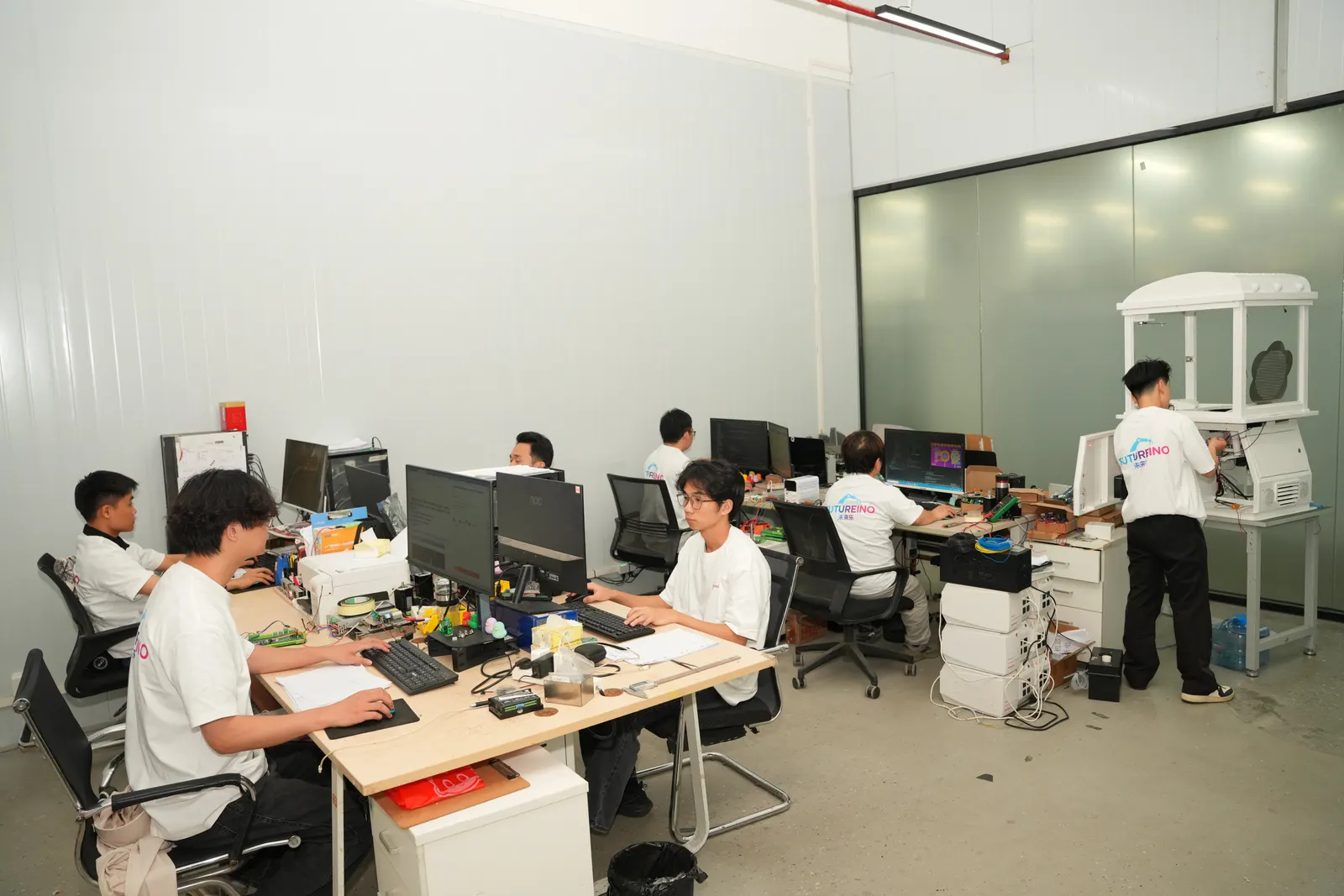
Remote diagnostics do the same for faults. When a machine flags an error, our engineers can read the log before anyone touches the cabinet. In practice that means most support tickets are resolved without a technician: we tell you which part, you fit it, the machine is back. When a part is genuinely needed, we ship it from the same Guangzhou production line that built the machine, to operators in 53 countries. No third-party sourcing, no waiting on a distributor who has never seen the inside of your unit.
Design choices that exist purely to save you visits
Low maintenance is not luck. Several things in our lineup are deliberately built to keep you away from the machine:
- Sealed cartridges over open reservoirs. The Perfume Station uses sealed inner cartridges specifically because an open fragrance reservoir evaporates and cross-contaminates between scents. Sealed means the fragrance you loaded last month still sells true this month.
- Capacity chosen for the route, not the spec sheet. Balloon Magic holds 336 balloons and the Candy Beast holds 300 cups. Those numbers were set by asking how often an operator should have to show up, then building backwards.
- Pre-packaged over fresh where it does not cost the experience. Our Ice Cream Truck dispenses 315 sealed frozen novelties rather than churning soft serve. Soft-serve machines need daily cleaning and regular servicing. Pre-packaged needs none. The customer cannot tell the difference; your calendar can.
- A 72-hour burn-in test before shipping. Every machine runs continuously in the factory before it goes in a container. Infant mortality failures, the loose connector and the bad board, surface on our floor rather than in your mall.
- In-house components. Heating systems, dispensing mechanisms and payment integration are purpose-built rather than assembled from generic parts. That matters most on the day something breaks: there is one company to call, and it is the one that drew the part.
None of this makes a machine immortal. It makes the failure list short, cheap and predictable, which is the only version of "low maintenance" that means anything on a P&L. If you are still costing out a purchase, the maintenance side is small enough that it rarely moves the decision: what the machine costs up front dominates the model, and consumables plus an hour a month are the running side of it.
When to stop reading a guide and call someone
Three signals mean the answer is not in a table. A noise that is new. A fault code that returns after you clear it. Product quality that drifts over a week rather than failing outright. In all three cases, film it and send it to us. Our support runs through an AI troubleshooting chat for instant answers, WhatsApp groups, email, live video calls with engineers, and a ticket system, with a 24-hour response commitment from the after-sales team. Every machine also ships with full documentation and training videos. If you would rather talk to a person first, contact the support team directly and you will be speaking with the factory, not a reseller reading from a manual.
Running costs beyond maintenance: see what card payments actually cost you per machine, per year.
Frequently Asked Questions
How often does a vending machine need maintenance?
Most Futureino machines need one operator visit every 7 to 14 days: refill the consumable, wipe the product path and the touchscreen, check the card reader. That visit runs 15 to 30 minutes. Busy sites move to weekly. Beyond that, a deeper clean each quarter and one full check a year is enough.
Who services the machine, me or a technician?
You do the routine work: refills, wiping the food path, swapping a print cassette. None of it needs a technician. A trained engineer is only involved for a mechanical or board-level repair, and most of those are diagnosed remotely first, so a local technician arrives already knowing which part to fit.
Do robotic machines need more maintenance than a snack machine?
Less than people expect, and it depends on the product. A snack or can machine has almost nothing to clean. Anything that handles food live, cotton candy, popcorn, shakes, needs its product path wiped on the refill visit. That wipe-down is the whole difference, and it costs you a few extra minutes.
How do I get spare parts?
We ship replacement parts globally from Guangzhou to operators in 53 countries. Because we build the machines ourselves, parts come off the same production line rather than a third-party supplier. Message the support team with your machine ID and a photo or video of the fault, and we identify the part for you.
How much downtime should I expect?
Routine maintenance costs no downtime worth counting: a refill visit takes 15 to 30 minutes and you choose the hour. Real downtime comes from waiting on a part. That is why we push remote diagnosis first and keep common wear items, cassettes, belts and nozzles, cheap enough to stock spares on site.
What support do you provide after the sale?
Every machine ships with technical documentation, training videos, and access to our support stack: an AI troubleshooting chat, WhatsApp groups, email, live video calls with engineers, and a ticket system. Our after-sales team responds within 24 hours. You are talking to the people who built the machine, not a reseller.
Machines built to be left alone
See the full robotic vending lineup with real capacities, cycle times and factory-direct pricing, or ask our engineers what a specific machine needs on your route.