
How Much Do Vending Machines Make? The Per-Machine Math
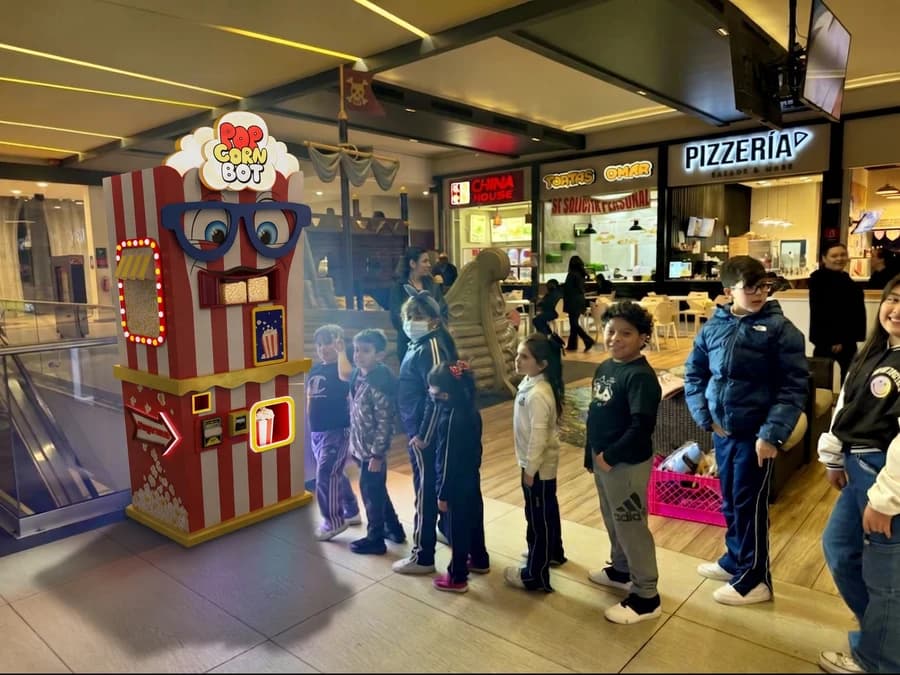
A robotic vending machine in a high-traffic venue typically grosses $900 to $4,000 a month. An AI photo booth doing 15 prints a day at $5 brings in about $2,250. A popcorn robot selling 30 cups at $3 does roughly $2,700. The honest floor is nearer $300 for a quiet machine in a dead corner, and the honest ceiling runs past $6,000 for a busy candy or popcorn unit. Three things decide where you land: footfall, price per serve, and whether the machine makes the product or just hands over a packet.
What one machine actually grosses per month
The arithmetic is not complicated. Serves per day × price per serve × 30. That is the same formula behind the calculator on our vending machine business model and ROI page, and it is the only formula that matters once the machine is on the floor. What follows are the real volumes and prices we see from operators buying out of our robotic vending machine catalog, with the consumable cost sitting next to the ticket so you can see the gap. What the hardware costs to buy is a separate question, and we answer it in how much vending machines cost. This page is only about what comes back in.
| Machine | Serves / day | Price per serve | Gross / month | Consumable cost per serve |
|---|---|---|---|---|
| Perfume Station | 10–30 sprays | $1–$3 | $300–$2,700 | Cents of fragrance |
| Smart Beverage Bar (coffee) | 15 drinks | $2–$5 | $900–$2,250 | $0.20–$0.50 |
| Boost Protein Shake Bar | 15 shakes | $5–$9 | $2,250–$4,050 | $0.50–$1.00 |
| Popcorn Bot | 30 cups | $3–$7 | $2,700–$6,300 | Under $0.30 |
| Cotton Candy Robot | 15 servings | ~$5 | ~$2,250 | Pennies of sugar (~$150/month) |
| AI Photo Booth | 15 prints | $5 | ~$2,250 | Print media only |
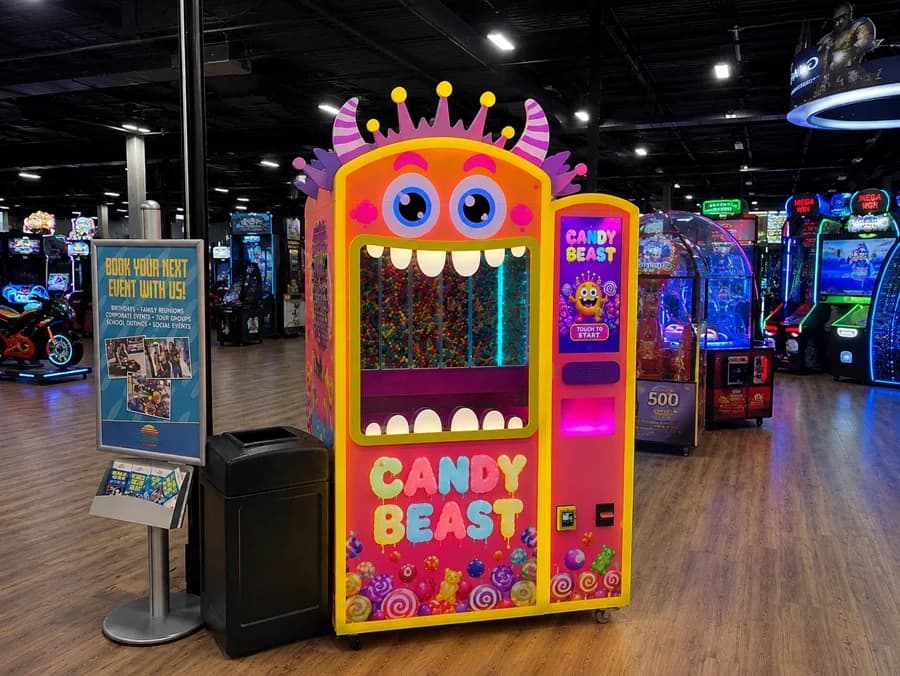
| Candy Beast | 15–25 cups | $4–$8 | $1,800–$6,000 | $0.80–$1.50 |
| ChocoArt 3D printer | 15 chocolates | ~$8 | ~$3,600 | Tempered chocolate |
| Balloon Magic | 30–50 balloons | $3–$8 | $2,700–$7,500 | Balloon and helium |
| FutureClaw | Per play | Play pricing | $300–$2,400 | Prize cost on wins only |
One caution about reading that table. Each row is a volume band multiplied by a price band, and the two extremes almost never show up in the same venue. A site busy enough for 25 candy cups a day is rarely a site where $8 a cup goes unchallenged. Plan on the middle of each row and treat the top as upside you have to earn.
The three numbers that move the total
Operators tend to obsess over which machine to buy. In practice the machine is the smallest of the three variables. Two identical popcorn robots, one in a cinema lobby and one in a suburban office park, will not produce results within shouting distance of each other.
| Variable | Weak placement | Strong placement | Why it matters |
|---|---|---|---|
| Daily footfall | Under 1,000 passersby | 5,000+ passersby | The multiplier on every other number. Nothing recovers from a bad one. |
| Dwell time | People walking through | People waiting, queuing, or browsing | An impulse buy needs a pause. Corridors convert far worse than queues. |
| Price per serve | Bottom of the band | Top of the band | Doubling $3 to $6 doubles gross without touching volume or cost. |
| Machine type | Packaged resale | Made on demand | A finished product carries a premium a wrapped snack never will. |
Footfall has a threshold, not a slope. Roughly 5,000 daily passersby is the working floor for an experiential machine that depends on strangers noticing it. Captive venues break that rule in a useful direction: a gym with 400 members converts several times harder than a mall with 20,000 shoppers, because the shake is what those 400 people came for.
Why the consumable cost barely dents the number
Here is the part the spreadsheets from traditional vending get wrong. On a machine that manufactures the product, your cost of goods is measured in cents and your ticket is measured in dollars. Popcorn kernels run under $0.30 against a cup that sells for $3 to $7. Coffee powder costs $0.20 to $0.50 against a $2 to $5 drink. A cotton candy robot burns about $150 of sugar a month while selling $2,250 of floss.
That has a practical consequence worth internalizing. Squeezing your supplier is a waste of energy. Twenty percent off your sugar bill saves $30 a month. Moving the machine six meters, to the side of the corridor people actually walk, can add ten sales a day. Placement is the lever. Procurement is a rounding error.
Experiential machines out-earn snack shelves
A traditional snack machine resells a packet someone else made, at a markup of maybe 30 to 50 percent, to a customer who could have bought the same packet in the shop next door. There is no theater and no premium. An experiential machine sells something the customer cannot get elsewhere in that building, made in front of them in 15 to 90 seconds.
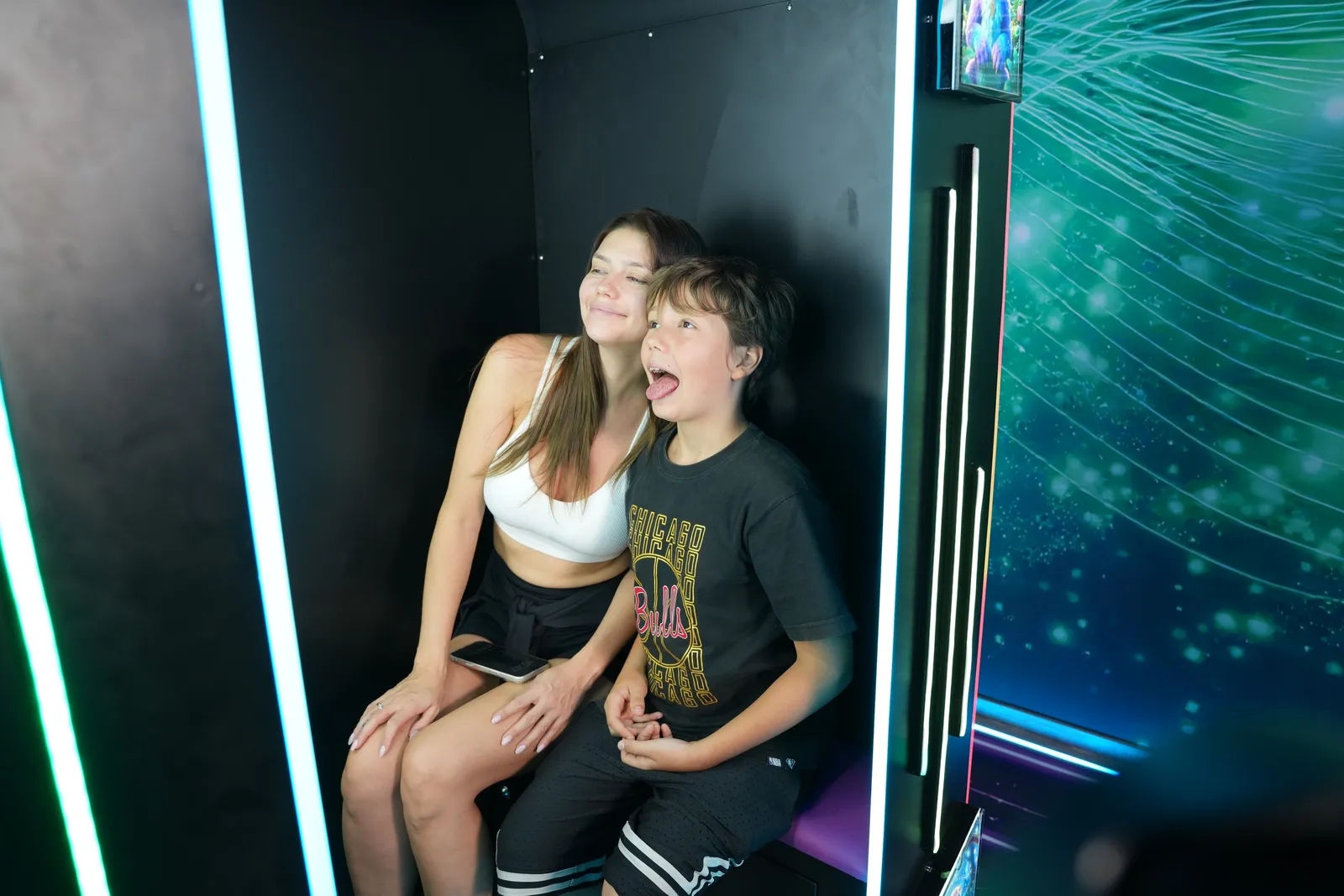
The AI Photo Booth is the cleanest illustration. It prints in about 15 seconds, holds 700 prints per cassette, and its only consumable is print media. At a conservative 15 prints a day and $5 a print it grosses roughly $2,250 a month before sticker sales. Nobody is paying $5 for the paper. They are paying for the thing that happened inside the booth. Snack machines have no equivalent of that, which is why their ceiling is set by the cost of the packet.
If you want the full ranking of which machine returns most per dollar invested, that is a separate question and we answer it in the most profitable vending machines guide. This page is about what a single machine puts in the till.
Rent, revenue share, and what each does to your take
Gross is not yours. Between the machine and your bank account sits a venue owner, and the deal you sign with them shapes your earnings more than any spec on the data sheet. Two structures cover almost every placement we see.
- Flat rent. You pay the venue a fixed monthly fee and keep everything else. Brilliant in a busy site, brutal in a quiet one, because the rent arrives whether the machine sold anything or not. Take this deal when you have counted the footfall yourself and you believe your own numbers.
- Revenue share. The venue takes an agreed percentage of sales and you pay nothing when nothing sells. It costs more in a strong month and protects you in a weak one. Take this deal in an unproven venue, or when the host needs a reason to say yes.
The split itself is negotiated, and it moves with how badly each side wants the placement. What is not negotiable is the arithmetic underneath: a revenue share scales with your success, and rent does not. Operators who guess at footfall almost always prefer they had started on a share. The two paths are laid out in full on our business model page.
What operators actually report
The uncomfortable truth is that the spread is wide and it is not evenly distributed. The strong placements cluster: malls with genuine weekend traffic, cinemas, arcades, gyms with a member base that treats the machine as part of the workout. The weak ones cluster too, and they usually share a cause. Someone took the first venue that said yes.
Machines that miss their numbers rarely miss because the machine underperformed. They miss because the footfall estimate was a guess, or the spot was around a corner from where people walk, or the price was set from nerves rather than from the market. All three are fixable. Two of them are fixable before you buy anything, which is the argument for counting traffic yourself, across a full week, before signing.
Earnings are only half the equation, of course. The other half is what you paid at the start, and buying factory-direct changes that number materially: our full price list runs from about $1,300 to $6,800 EXW Guangzhou, with no importer margin inside it. The breakdown lives in how much vending machines cost. A machine that costs thousands less on day one reaches payback that much sooner, at exactly the same monthly revenue.
Running your own number before you buy
Take the venue you have in mind. Count the people who pass the exact spot over a weekday hour and a weekend hour, and be honest about how many of them will stop. Multiply your realistic serves per day by the price you can defend in that venue, times 30. Subtract the venue deal and a couple of hundred for consumables. That figure, not the one in a brochure, is what the machine makes, and it is the line every vending machine business plan is built around.
When you want a second opinion on it, ask us. Futureino builds these machines in Guangzhou and supports operators from Dubai, so the people you talk to have seen the same machine succeed and struggle across 53 countries. Tell us the venue and the footfall and we will tell you what we think it does, including when we think the answer is no.
Thinking of buying an existing operation instead? Compare it against new equipment in route or new machines.
Frequently Asked Questions
How much can a vending machine make in a day?
A robotic machine in a busy venue takes roughly $30 to $130 a day. A photo booth doing 15 prints at $5 makes $75. A popcorn robot selling 30 cups at $3 makes $90. Quiet placements land nearer $10 to $30 a day, which is the honest floor.
What is the average vending machine profit per month?
Across our operators, a machine in a genuinely high-traffic venue averages roughly $900 to $4,000 gross a month. Consumables take a small slice, usually under $200. The venue deal takes the larger slice. Average is a weak guide here, because location swings the result more than the machine does.
Is $1,000 a month realistic from a single vending machine?
Yes, in a venue with real footfall. A coffee bar selling 15 drinks a day at $2 to $5 grosses $900 to $2,250. Cotton candy at 15 servings and $5 grosses $2,250. Under 1,000 daily passersby, $1,000 a month stops being a safe assumption.
How much of the revenue does the operator actually keep?
Most of it, because the product cost is tiny. Popcorn costs under $0.30 against a $3 to $7 cup, and cotton candy sugar runs about $150 a month against $2,250 of sales. The venue agreement and payment fees are what really decide your net, not the ingredients.
How many months of earnings does it take to cover the machine?
Divide the factory price by your monthly net. A $2,500 popcorn robot grossing $2,700 clears its price fast. A $5,300 photo booth at $2,250 a month takes 6 to 10 months once the venue share is paid. Weak footfall stretches every one of these windows.
How many vending machines do you need to replace a salary?
At $900 to $4,000 gross per machine, operators typically reach a full-time income somewhere between three and eight machines, depending on venue quality. The route matters as much as the count: machines clustered in one city cost far less time to service than scattered ones.
Run the numbers on your venue
Model serves per day, price per serve, and payback with the calculator on our business model page, or send us your venue and footfall and we will come back with a realistic figure.