
The History of Vending Machines: From Holy Water to Robot Arms
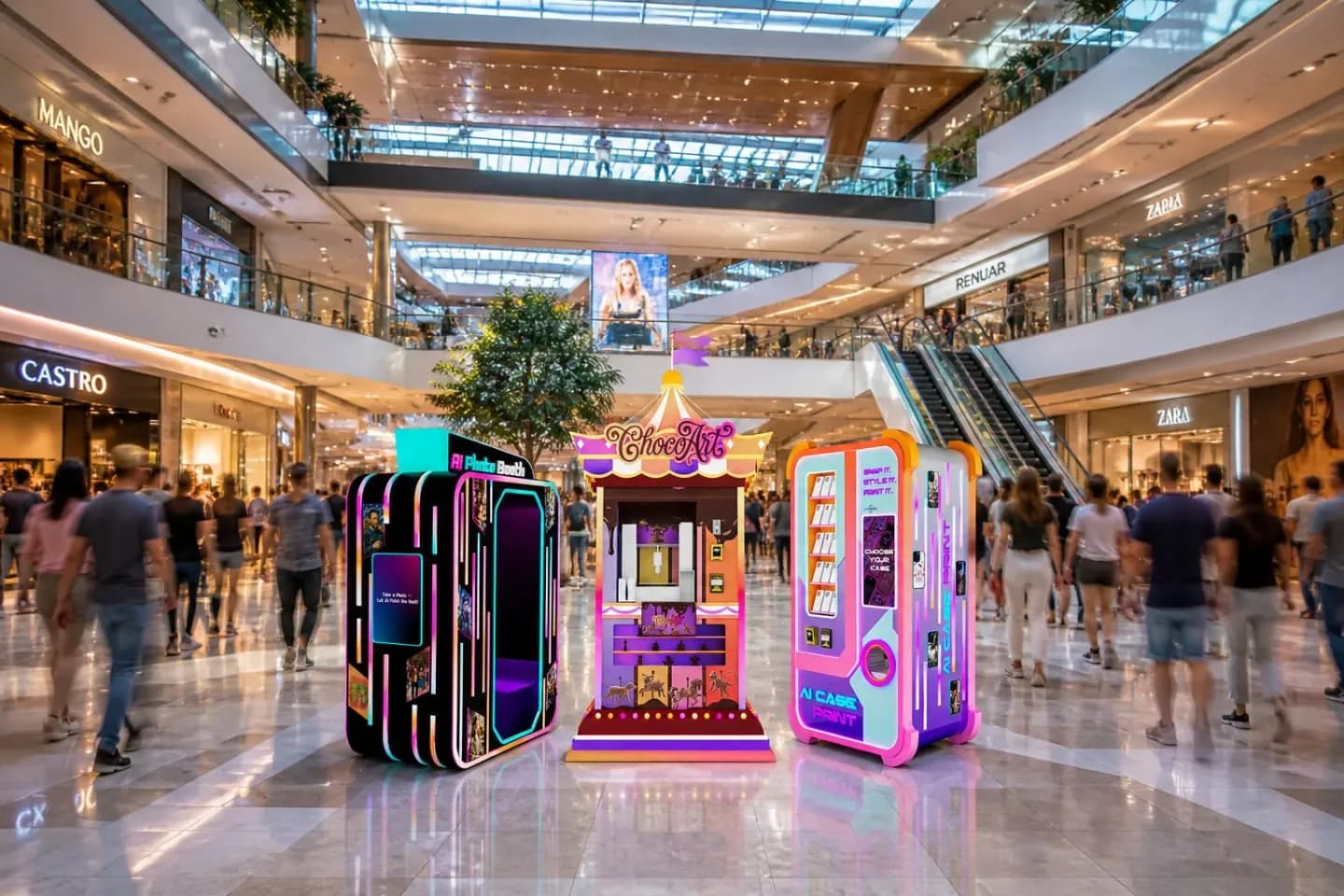
The vending machine is about two thousand years old. Hero of Alexandria built the first one in Roman Egypt in the first century AD: a coin dropped onto a pan, the pan tipped a lever, the lever opened a valve, liquid ran out until the coin slid off and a counterweight shut it again. The product was holy water. Everything since has been the same idea applied to better goods, and the interesting part of the story is not the machines. It is what each era decided was worth selling without a shopkeeper standing there.
Two thousand years in one table
| Date | Where | What happened |
|---|---|---|
| 1st century AD | Roman Egypt | Hero of Alexandria's coin-operated dispenser for holy water |
| 1615 | England | Brass coin-operated tobacco boxes appear in taverns |
| 1822 | England | Richard Carlile builds a newspaper dispenser for banned publications |
| 1867 | England | Simon Denham patents the first fully automatic machine, selling stamps |
| 1883 | London | Percival Everitt's postcard machine spreads to stations and post offices |
| 1887 | England | The Sweetmeat Automatic Delivery Company becomes the first vending operator |
| 1888 | New York | Thomas Adams sells Tutti-Frutti gum on elevated train platforms |
| 1893 | Germany | Stollwerck runs 15,000 machines selling chocolate, then cigarettes and soap |
| 1902 | Philadelphia | Horn and Hardart open the first American Automat on 9 June |
| 1904 | Japan | Takashichi Tawaraya builds an automatic stamp and postcard machine |
| 1946 | Philadelphia | The Kwik Kafe becomes the first automatic hot beverage machine |
| Today | Japan | More than 5.5 million machines, roughly one per 23 people |
The coin was the invention, not the machine
Hero's device is often written up as a curiosity, which undersells it. The mechanism solved a problem that had nothing to do with engineering: how do you take payment from a stranger when nobody is watching. His answer was to make the coin itself do the work, using its weight to open a valve for exactly as long as it took to slide off the pan. Portion control and payment collection, in one moving part.
Then nothing much happened for sixteen centuries, because the missing ingredient was not mechanical. It was standardised coinage, dense crowds and goods cheap enough to sell in single units. All three arrived together in industrial England.
Why the modern machine is English and Victorian
Coin-operated tobacco boxes turned up in English taverns as early as 1615, working on trust as much as on mechanism. The real jump came in 1822, when Richard Carlile built a dispenser so his shop could sell banned publications without a person handing them over. The first machine of the modern era existed to remove a human from a transaction that was legally awkward, which is a rather good origin story for an industry now full of them.
Simon Denham patented a fully automatic stamp machine in 1867, and Percival Everitt made the format stick in 1883 with a postcard machine that also sold envelopes and notepaper. Everitt's machines were installed where the crowds already stood, at railway stations and post offices, which remains the single best predictor of whether a vending machine will earn anything. The venue logic has not changed in 140 years, and the modern version of that reasoning is set out in where to put a vending machine.
The first vending industry
By 1887 the Sweetmeat Automatic Delivery Company existed purely to install and maintain machines, which makes it the first vending operator rather than the first machine builder. That split between whoever makes the hardware and whoever runs the route is the same split the industry has today.
Scale followed almost immediately. By 1893 the German chocolate maker Stollwerck was running 15,000 vending machines, later branching into cigarettes, matches, gum and soap. A confectionery brand operating fifteen thousand machines in the 1890s is a genuinely startling number, and it tells you the model was proven commercially long before it was proven technologically.
America turned the machine into a restaurant
On 9 June 1902, Horn and Hardart opened the first American Automat at 818 Chestnut Street in Philadelphia, using waiterless restaurant equipment imported from Berlin, where Max Sielaff had pioneered the format. A wall of small glass doors, a coin in the slot, and a hot meal behind each one. At its peak the Automat was how a generation of American city workers ate lunch, and it did something the industry keeps rediscovering: it made buying from a machine feel like an occasion rather than a compromise.
The Automat also proved the harder half of the business. Someone had to cook, refill and clean behind that wall. Automated retail has never actually removed the labour, it has only moved it out of sight and off the customer's clock.
The century of the drink
The next real leap was hot liquid. In 1946, and some sources say 1947, the Rudd-Melikian company of Philadelphia launched the Kwik Kafe, the first automatic hot beverage machine. It dropped a paper cup and filled it with coffee made from instant powder and hot water. Cyrus Melikian had the idea while serving in the US Army Air Force and wanting coffee between meals, which is roughly how every good vending product has ever been conceived.
The cup machine mattered because it changed what a vending machine was. Until then the machine handed over an object that already existed. From the Kwik Kafe onward, it assembled something. Every fresh-food and fresh-drink machine since is a descendant of that decision.
Japan, and what saturation looks like
Japan began in 1904 with Takashichi Tawaraya's stamp and postcard machine and never stopped. There are now more than 5.5 million vending machines in Japan, about one for every 23 people, the densest deployment on earth. It is the closest thing the industry has to a natural experiment: given very low crime, very high urban density and a culture comfortable with automation, this is where vending ends up.
The lesson western operators take from it is usually the wrong one. Japan's density is not a story about machines, it is a story about streets safe enough to leave a machine outside overnight. Placement economics still decide everything.
Payment first, then data
For most of the twentieth century the constraint was the coin. Machines were designed around what a mechanism could recognise, prices were set to the coins people carried, and a jammed coin slot was a dead machine. Card readers removed the price ceiling, because a customer who is tapping does not feel a $6 purchase the way they feel counting out six coins. Connectivity then removed the second constraint, which was ignorance: an operator who can see stock levels and sales by hour runs a completely different business from one who drives out to find out. Both of those shifts, and what they cost, are covered in the guide to cashless vending payments.
The robotic era, which is where we come in
The current chapter goes past assembling and into making. A robotic vending machine manufactures the product after payment, in front of the customer, as the reason for the sale rather than a side effect of it. Our Cotton Candy Robot spins a fresh cone in 180 seconds behind a viewing window, the Boost bar mixes a shake in 60, ChocoArt prints chocolate in 120, and the AI Photo Booth produces a print in 15. None of those products existed before somebody paid for them.
Futureino builds that category at scale from Guangzhou: three facilities totalling over 20,000 square metres, 500 machines a month of capacity, 40 or more models available now out of 250 built historically, and 250 employees including more than 30 engineers. Around 50,000 machines we built are operating worldwide, with buyers in 53 countries. We have been manufacturing for fifteen years, though the Futureino brand itself is a little over two. The full lineup is at our vending machines page, and the numbers behind the company are laid out in how big Futureino actually is.
What has not changed since Hero of Alexandria
Three things, and they are the same three that decide whether a machine you buy this year makes money. The machine has to stand where people already are, which is why Everitt put his in railway stations. It has to take payment from a stranger without argument, which was a falling coin in the first century and a contactless tap now. And somebody still has to refill it, which the Automat learned the hard way in 1902.
Everything else in this two-thousand-year story is packaging. If you are working out which machine belongs in your own venue, the honest comparison sits in the most profitable vending machines compared, and the difference between a connected machine and a simple one is argued in smart versus traditional vending machines.
Frequently Asked Questions
Who invented the first vending machine?
Hero of Alexandria, in Roman Egypt in the first century AD. His device took a coin, which fell onto a pan attached to a lever, opening a valve that released a measured amount of liquid until the coin slid off and a counterweight closed it again. The product was holy water.
What was the first modern vending machine?
Percival Everitt's postcard machine, introduced in London in 1883, which spread quickly to railway stations and post offices and also sold envelopes and notepaper. An earlier claim belongs to Simon Denham, who received British Patent 706 in 1867 for a fully automatic stamp machine.
What was the first vending machine in America?
The Thomas Adams Gum Company built it in 1888, selling Tutti-Frutti gum on New York City train platforms. Fourteen years later Horn and Hardart opened the first American Automat in Philadelphia on 9 June 1902, using waiterless restaurant equipment imported from Berlin.
Which country has the most vending machines per person?
Japan, by a distance. There are more than 5.5 million machines installed across the country, roughly one for every twenty-three people, the highest ratio anywhere. Japan's own vending history starts in 1904, when Takashichi Tawaraya built an automatic stamp and postcard machine.
When did vending machines start selling hot drinks?
1946, or 1947 depending on the source. The Kwik Kafe, built by the Rudd-Melikian company of Philadelphia, was the first automatic hot beverage machine: it dispensed a paper cup and filled it with coffee made from instant powder and hot water. The idea came to Cyrus Melikian while he was serving in the US Army Air Force.
What makes a robotic vending machine different from a traditional one?
A traditional machine moves an object that already exists from a shelf to a hatch. A robotic machine makes the product after payment. Our Cotton Candy Robot spins a fresh cone in 180 seconds, the Boost bar mixes a shake in 60, and ChocoArt prints chocolate in 120. Nothing on those shelves existed before the customer paid.
See what the current chapter looks like
Forty machines that make the product in front of the customer, built in Guangzhou and shipped to 53 countries. Tell us the venue and we will tell you which one fits it.