Office Vending Machines: What Actually Works in a Workplace
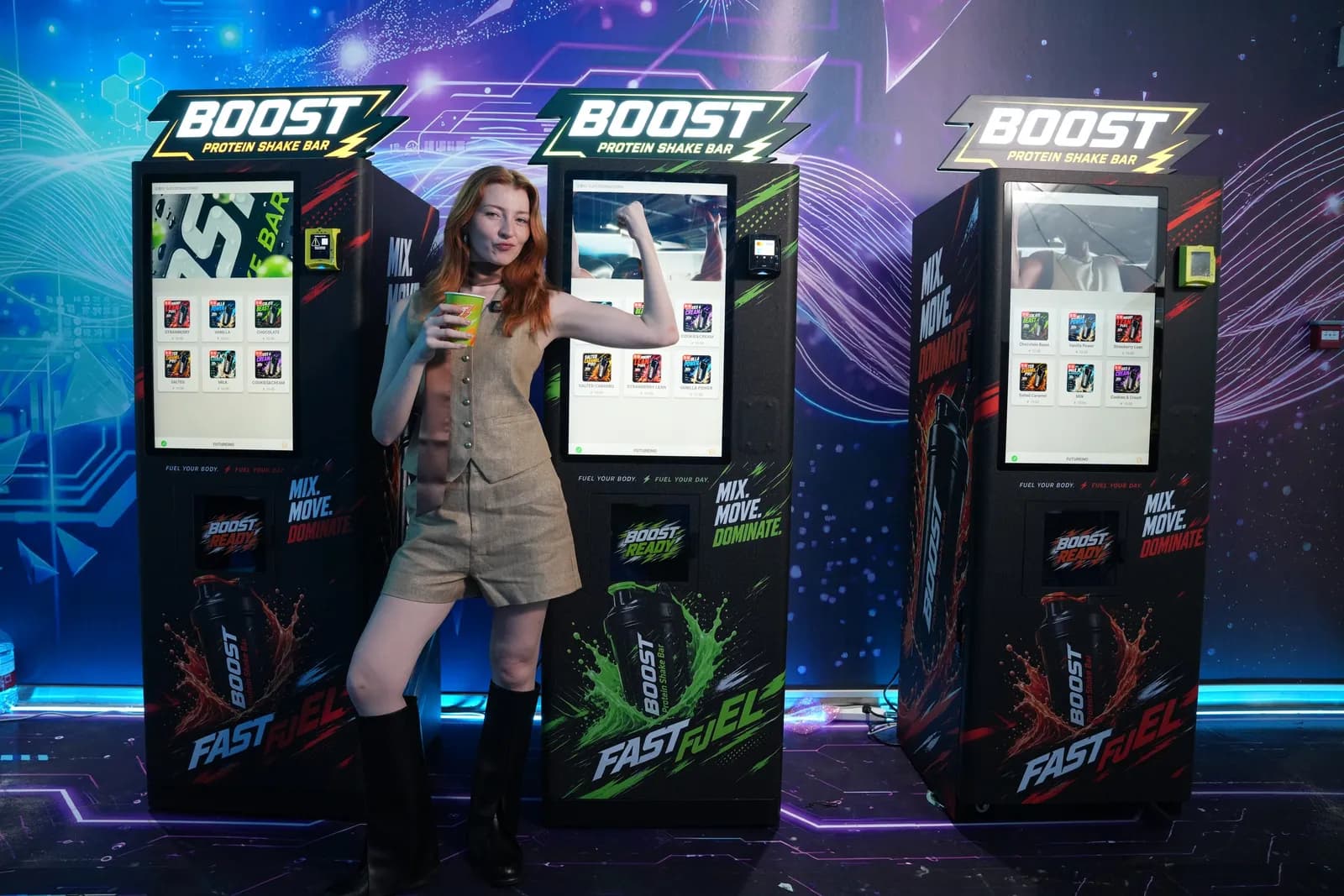
The office vending machines that actually earn their floor space are drink machines, not snack walls. Futureino's Boost coffee and protein bars cost $3,300–$3,800 EXW factory-direct, run on a wall outlet with no plumbing, and hold 312 cups per fill. At a $2.50 cup and roughly $0.35 of powder, 15 drinks a day pays the machine off in about four months. A snack machine sits alongside that at $3,300–$4,000, but it follows the coffee: people walk to a building for the caffeine and buy the granola bar on the way past.
What an office actually needs
Offices reject most vending hardware for boring reasons, not commercial ones. The three questions facilities managers ask, in order:
- Does it need plumbing? If yes, it is dead on arrival in a leased building. Every Boost machine mixes from built-in water tanks, so the answer is no.
- What does it draw? This is where the real trap lives, and we cover it below.
- How much floor does it eat? A Boost bar occupies 87 × 67 cm, about the footprint of a filing cabinet, at 2.05 m tall.
Notice what is missing: nobody asks about brewing quality. Office drink demand is about speed and availability at 9:15 and 2:30, not about crema. An office coffee vending machine that serves 40+ combinations from eight powder canisters, hot, iced, or room temperature, wins on menu breadth and on never having a queue.
The four machines that fit a workplace
Out of a catalogue of dozens, four suit an office. The rest, like the balloon vending machine, are built for malls, arcades, and family venues where the machine is the attraction. In an office the machine is infrastructure, and it should behave like it.
| Machine | What it serves | Factory price (USD) | Office size that supports it |
|---|---|---|---|
| Boost Smart Beverage Bar | Coffee, mocha, hot chocolate, tea, matcha, juice: 40+ combinations, hot / iced / room temp | $3,300–$3,800 | 40+ staff, or any floor with a shared lobby |
| Boost Protein Shake Bar | Protein shakes, meal-replacement and collagen blends, milk and juice powders | $3,300–$3,800 | Offices with an on-site gym, or 80+ staff in a wellness-led workplace |
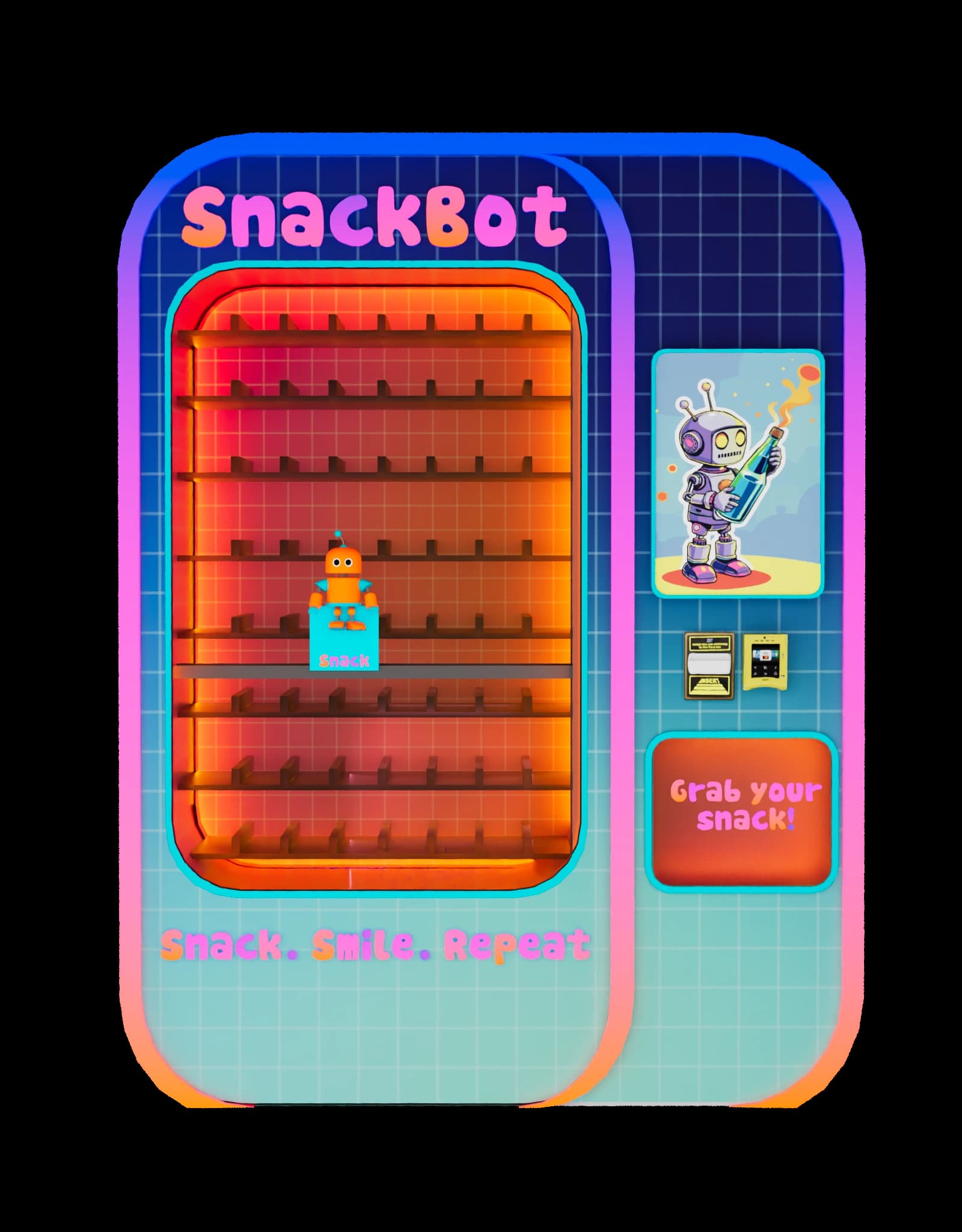
| Snacks Bot | 280 packaged items: bars, crisps, nuts, chocolate | $3,300–$4,000 | 60+ staff, or a multi-tenant floor sharing a breakroom |
| Mega Can | 270 chilled cans and bottles | $4,300–$5,500 | 100+ staff, or hot climates where coffee alone underperforms |
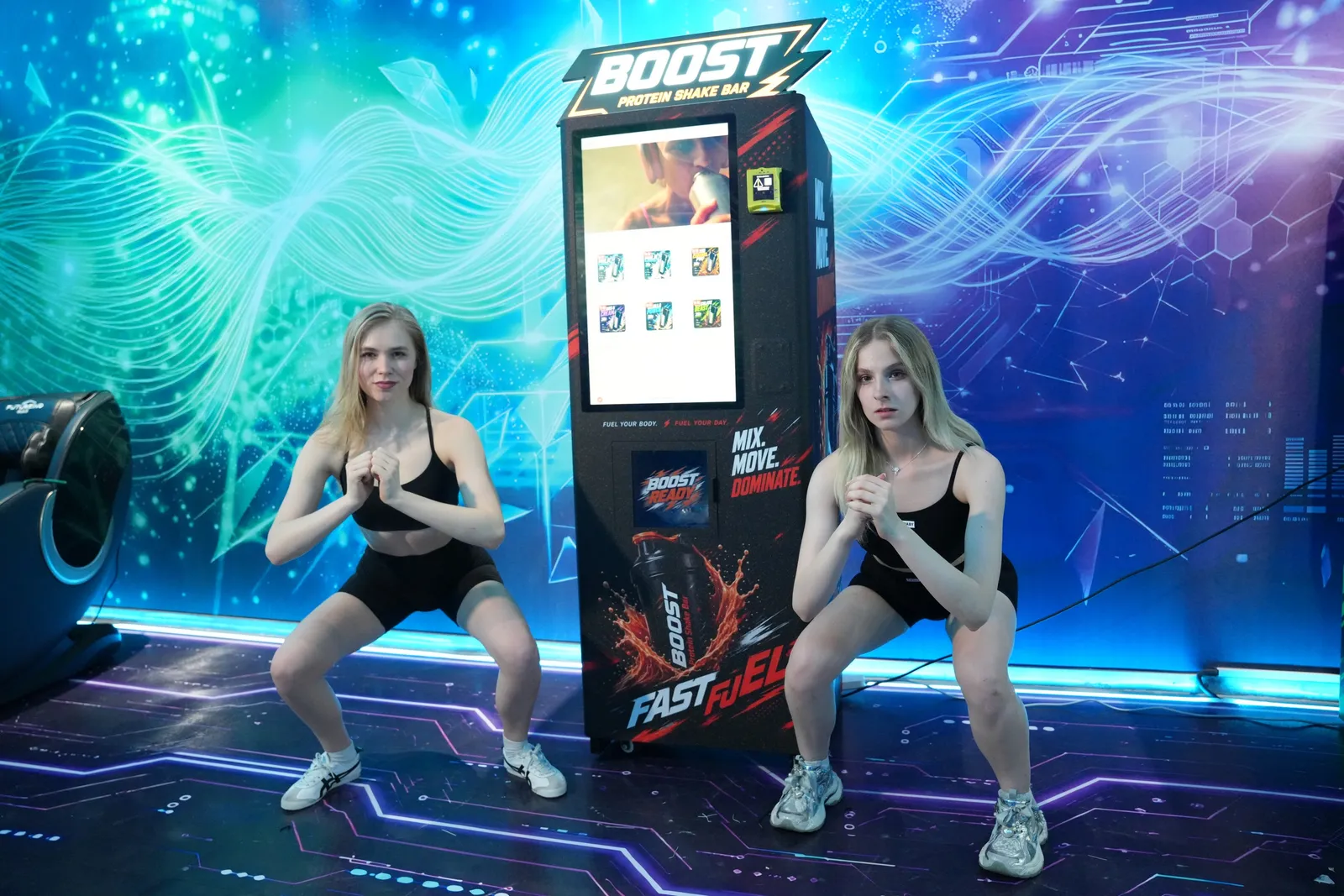
The two Boost machines share a chassis, a canister system, and a price. The only real difference is what goes in the canisters, which is why an office with a gym floor sometimes buys one of each. Full specs for both sit on the protein shake vending machine page and its coffee twin, and the rest of the lineup is in the robotic vending machine catalogue.
Canister lineup is the decision most buyers skip and later regret. Eight canisters sounds like plenty until you realise an office does not want six coffees. The lineup that holds up across a working day is roughly three coffee variants, one chocolate, one tea or matcha, and one juice powder for the people who do not drink caffeine after lunch. That last canister is the one that turns a machine the sales team uses into a machine the whole floor uses, and it is the one everybody cuts first. Canisters swap out in minutes and the touchscreen menu updates itself, so a lineup that misses is a restock away from being fixed.
The power trap nobody mentions
Here is the number that decides your install. A Boost bar draws 2,200W. On 220V that is 10A, which any normal European, Gulf, or Asian office outlet carries without a second thought. On 110V the same machine pulls 20A, and a standard North American 15A or 20A circuit will not hold it. A US or Canadian office needs either the 220V build or a dedicated circuit run to the spot.
This is a five-minute conversation before you order and a very expensive one after the machine lands. Choose voltage at quote stage. The snack and can machines have no such problem: Snacks Bot draws 380W (4A at 110V) and Mega Can 500W, both of which plug in anywhere.
How many people you need
Fifteen drinks a day is the number to design around. That is the payback threshold, and it maps to headcount predictably once you know whether staff are paying:
- Under 40 staff, paid: too thin on its own. Put the machine in a shared lobby or a multi-tenant corridor so three companies feed it instead of one.
- 40 to 100 staff, paid: one Beverage Bar. Expect roughly one drink per three or four people per day once the habit sets in, which lands you at 15 to 30 cups.
- 100 to 250 staff: one Beverage Bar comfortably, plus a snack machine if the nearest shop is more than a three-minute walk.
- 250+ or multi-floor: one machine per floor cluster. A machine two floors away gets used like it is in another building.
If the drinks are free, multiply volume by two to three and plan refills accordingly. A 100-cup fill that lasted a week now lasts two or three days. Location logic beyond the office is covered in our guide on where to put a vending machine.
Buying for your staff, or placing as an operator
These are two different businesses that happen to use the same hardware, and people conflate them constantly. If snacks rather than drinks are the plan, the snack vending machine business runs on different margins and a different restocking rhythm.
If you are buying for your own office, the machine is a facilities purchase competing against a coffee service contract. A managed office coffee subscription runs a few hundred dollars a month, so a $3,300–$3,800 machine you own outright breaks even against it inside 12 to 18 months and then costs you only powder. You can charge $1 to cover consumables or give it away entirely.
If you are placing a machine as an operator, the office is a venue and you are negotiating for a corner of it. Offices are unusually good venues: demand is predictable, the population is captive, security is handled, and vandalism is nil. They are also slow to sign and they expect a revenue share or a flat monthly fee. The tradeoff framework for either path is in our vending machine business model breakdown, and the full cost picture across our lineup is in how much vending machines cost.
Cashless, and why remote monitoring matters more here
Every machine we ship runs card and QR payments, with no coin mechanism and no cash to collect. In an office that is not a convenience feature, it is the thing that makes the machine viable: nobody is walking a cash box out of a secured floor twice a week, and finance gets a clean transaction record instead of a bag of coins.
Remote diagnostics carry more weight in an office than anywhere else, for a reason that has nothing to do with revenue. A machine that fails in a mall loses you sales. A machine that fails in an office breaks a promise you made to your own staff, and you will hear about it. Knowing a canister is low before Monday morning is worth more than the drinks it saves.
Where the price comes from
The $3,300–$3,800 on a Boost bar is EXW Guangzhou, from the factory that builds it. A distributor buying the same machine and reselling it into your market adds their margin, their warehousing, and their risk, which is how a $3,800 machine becomes a $6,000 machine with a nicer brochure. Nothing changes inside the cabinet.
Factory-direct also changes what happens when something goes wrong. Voltage selection, canister lineup, menu language, and your company logo on the panel are all decided before production rather than worked around after delivery. Lead time runs three to five weeks. When you call about a fault, you reach the people who assembled the unit rather than a reseller reading the same manual you have.
For classic snack and drink cabinets in six sizes, built in our own factory in Guangzhou, see the vending machine manufacturer page.
Frequently Asked Questions
Who pays for an office vending machine?
Two models. The company buys the machine outright ($3,300–$3,800 factory-direct for a Boost bar) and either keeps the revenue or gives drinks away as a staff perk. Or an operator places the machine, keeps the sales, and pays the office a revenue share or flat fee. Buying outright is cheaper past roughly 18 months.
Should drinks be free or paid for staff?
Both work, and the choice changes the machine you need. Free drinks push volume up two to three times, so a 60-person office behaves like a 150-person one and needs refills far more often. Charging $1 to $2 covers the powder, filters usage down to real demand, and still reads as a perk.
Does an office vending machine need plumbing?
No. The Boost Smart Beverage Bar and Boost Protein Shake Bar both carry built-in water tanks, so they need a wall outlet and nothing else. Snacks Bot and Mega Can never touch water at all. That is why these machines can sit on a leased floor without landlord approval for site works.
How many employees justify an office vending machine?
Around 40 people is the practical floor for a paid coffee machine, because 15 drinks a day is the point where a $3,300–$3,800 machine clears its cost in about four months. Below that, place it somewhere shared: a lobby, a co-working floor, or a building where several tenants use one corridor.
Who services the machine once it is installed?
You or your operator. Refilling the eight powder canisters and the water tank takes minutes, and a 100-cup fill covers roughly a week at 15 drinks a day. Remote diagnostics flag faults before anyone in the office notices, and Futureino ships spare parts globally from the Guangzhou factory.
What is the best snack vending machine for an office?
Pick one that will not jam in front of your own staff. Snacks Bot uses a robot elevator lift rather than a drop coil, so bars and crisps arrive intact at a side-collection window instead of falling two feet. It holds 320 items and costs $3,300–$4,000 factory-direct.
Put the right machine in your office
See full specs, dimensions, and current factory pricing for the Boost bars and the rest of the lineup, or send us your headcount and voltage and we will tell you what fits.